How to Use a Bourbon Flavor Wheel (And What It Tells You About Taste)

Jump to:
- What is a bourbon flavor wheel?
- How bourbon gets its flavors
- How to read a bourbon flavor wheel
- Step-by-step: how to use a bourbon flavor wheel while tasting bourbon
- Common bourbon flavor notes you’ll see on the wheel
- Exploring the flavor wheel with Wild Turkey
- What a flavor wheel tells you about your taste
Before we get to the bourbon flavor wheel, let’s talk about the magic of bourbon. Picture endless rows of oak barrels breathing in Kentucky air and exhaling vanilla-scented gold. Fresh barrels rumble across the rickhouse floor, their staves still warm from their fiery char. There’s smoke in the air, sweetness in the mash, and time does its work in the dark. Bourbon is romance in liquid form, and its flavors deserve to be appreciated.
This is the power of the bourbon flavor wheel. It’s your tuning tool to help pick up what the master distiller and the oak barrels laid down—no previous bourbon-tasting experience required. From the sweetness of corn to the spice of rye, this wheel is your all-access pass to bourbon’s greatest flavor hits.
What is a bourbon flavor wheel?

The bourbon flavor wheel is a handy visual guide that organizes the liquid gold into easy-to-understand bourbon tasting notes. It was developed by The Council of Whiskey Masters, so you know they’ve covered all the bases. It starts with a broad range of flavor categories in the center, like sweet, spicy, fruity, floral, and woody.
From there, the wheel expands outward into specific flavors like vanilla, caramel, cinnamon, tobacco, and coffee. After that, it gets even more specific, which helps drinkers link bourbon flavors to something that they know, like dark chocolate or marzipan. It also covers texture or mouthfeel, flawed flavors, like cardboard or wet dog (seriously), and aged flavors from the barrel it was stored in.
Distillers, bartenders, and tasters use flavor wheels because they make tasting more structured and fun. Instead of guesstimating or defaulting to ‘I like it’ or ‘I don’t like it’, the bourbon flavor wheel gives you the language to describe the experience. The most important thing to remember is that it’s not a test. It’s a guide, so have fun with it.
One person’s cornbread tasting note is another person’s popcorn. There are no wrong answers. The more you use the wheel and identify flavors, the more you expand your bourbon-tasting vocabulary. In short: it’s your cheat sheet for bourbon tasting notes.
How bourbon gets its flavors
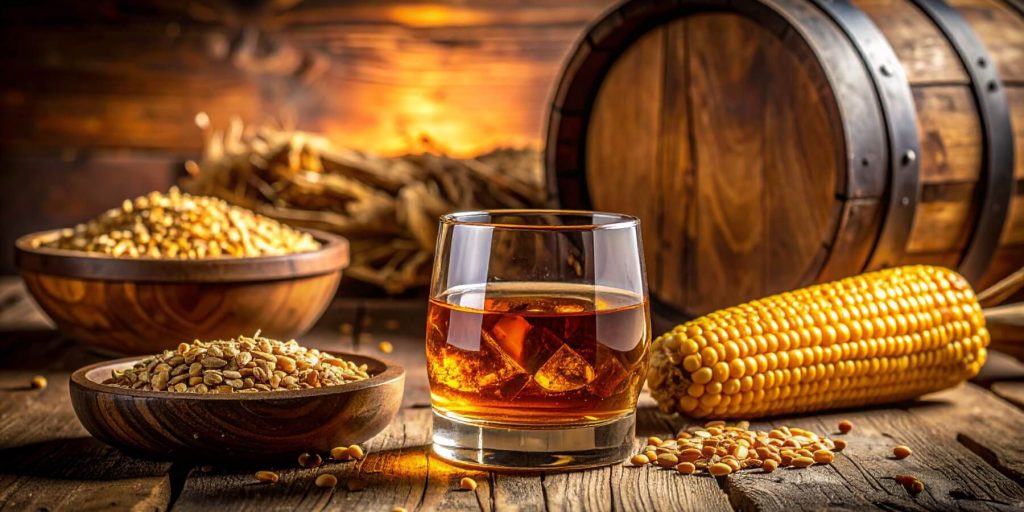
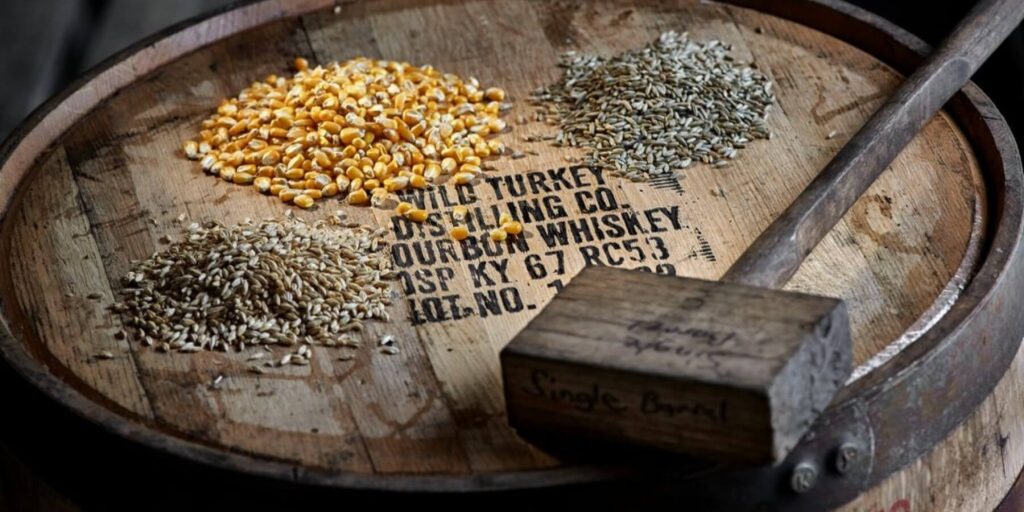
Let’s hop into a barrel and imagine we’re floating down a river of bourbon while learning how it’s made. It all starts with the grains, and for bourbon, that means corn. By law it must be at least 51% corn to be classified as bourbon. Corn is high in sugar, so it brings natural sweetness with notes of caramel, toffee, and fruity undertones.
Most bourbons also include a mix of rye, wheat or malted barley to balance the mash bill. Flavor-wise, rye adds spice and peppery warmth; wheat brings softness and sweetness, and barley helps kickstart fermentation while adding a subtle nutty note. After the distillation process, the spirit is transferred to charred new oak barrels, and this is where the magic of aging begins.
As the liquor rests in the wood, it pulls out flavors, like toasted oak, vanilla, caramel, smoke and spice. Lastly, there’s time and environment. Heat, cold, humidity, and airflow all influence how bourbon matures. Over the years, the liquor deepens in color, texture, and complexity.
Every step of the creation process is revealed with your first sip, and this is where the power of the bourbon flavor wheel comes into play. It helps you identify the flavor families and gives clues to how it was produced.
Read more: Bourbon vs. Rye: What’s the difference?
How to read a bourbon flavor wheel

Ready for the big test? Juuust kidding. Using a bourbon flavor wheel couldn’t be easier. Simply start in the center. That’s where the big flavor families live. Think floral, fruity, woody, sweet, and spicy. These are your first impressions, the heavy hitters, or the headline flavors.
As you move outward like the intrepid flavor adventurer that you are, you explore the outer rings. Here you’ll find more specific notes that fall under each category. Sweet will branch into sweetener, confectionery, and chocolate categories. From there, you’ll venture into more refined flavors, like brown sugar, maple syrup, butterscotch, nougat, milk chocolate, or cocoa.
For a spice trajectory, you’ll hit the baking, savory or piquant categories. From there, they’ll branch into specifics like cinnamon, clove, coriander, caraway, pepper, and allspice. The wheel isn’t there to tell you what you should taste. It’s there to help you describe what you are tasting, and everyone’s palate is different.
Start broad and work your way out. Does it taste sweet and spicy, or is it herbaceous and peppery? What does it remind you of? The specifics will come with time and practice. Did someone say, ‘distillery tasting tour’? Yes, please!
Read next: Scotch vs. Bourbon: What’s the Difference?
Step-by-step: how to use a bourbon flavor wheel while tasting bourbon
Pull up a barstool, grab your favorite bourbon, and let’s sip and learn.
1. Look

Hold the glass up to the light and take a good long look. Notice the color. Is it pale gold, rich amber, dark mahogany, or reddish-brown? The longer the bourbon is aged, the darker it will become. Swirl the bourbon gently and watch how it moves. The way the bourbon clings to the glass is known as its ‘legs’. Long legs often equal robust flavors.
2. Smell

Keeping your mouth slightly open, breathe in through your nose. This technique draws more aroma compounds into your olfactory system, or sense of smell. Take small sniffs and work your way up to longer ones. What is your first impression? Sweet? Woody? Spicy? Try to identify individual flavors from the bouquet. How intense are the aromas? Do you suddenly feel like a cinnamon cookie? Chances are you’re picking up baking spices. Plot your experience on the bourbon wheel and follow your nose.
3. Taste

Take a small sip and hold it in your mouth, then gently roll it around to coat your palate. Does anything stand out? After a short pause, swallow the bourbon and see what lingers. Your first sip tempers the palate, and a second sip will often provide greater detail. Things to look for:
- Sweetness: vanilla, caramel, or honey
- Spice: pepper, cinnamon, or baking spice
- Oak: toasted wood or smoke
- Texture: light, creamy, or rich
Go back to the bourbon flavor wheel and choose the flavor that is most prominent to you. Continue tasting and see if you can pick up any of the flavors that come after it. It often helps to compare the tasting notes on the bottle with what you are picking up.
4. Finish
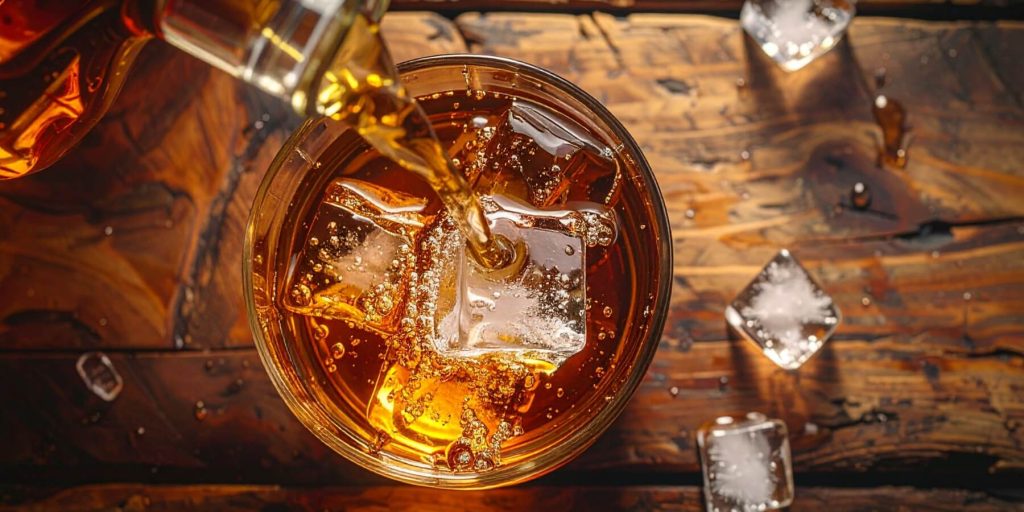
The lingering finish is why so many people fall in love with bourbon. It’s known as the Kentucky Hug, and this is where the oaky and smoky notes shine. Are you also getting a hint of spice? Is there a sweet vanilla note in the background? The key is to use the wheel as a road map at every stage, without spiraling off course. Follow your nose, trust your taste buds, and let your senses lead.
Keep learning: A Beginner’s Guide to Drinking Bourbon
Common bourbon flavor notes you’ll see on the wheel
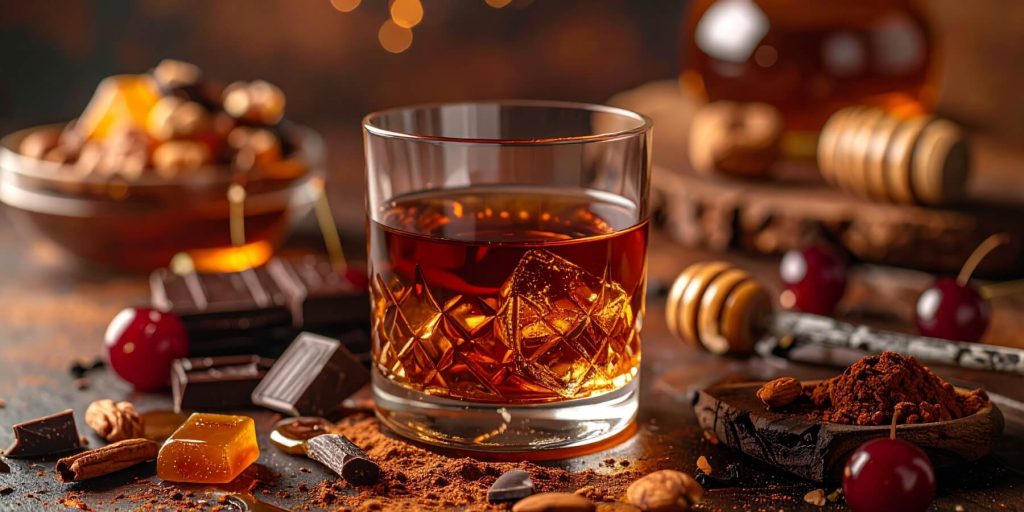
Say hello to some of the heavy-hitting bourbon tasting notes.
- Vanilla: a signature bourbon note, derived from the charred new oak barrels.
- Caramel: adds sweetness and depth, often reminiscent of butterscotch or toffee.
- Spice: notes of cinnamon, cloves, and nutmeg add warmth and complexity.
- Fruit: dried fruits like cherries, apples, or apricots add sweetness and depth.
- Floral: fermentation imparts floral notes like honeysuckle, rose petals, or potpourri.
- Honey: a subtle sweetness that enhances mouthfeel and smoothness.
- Oak: charred oak imparts a woody, sometimes smoky flavor.
- Tobacco: well-aged bourbons often feature this robust, earthy quality.
- Chocolate: bittersweet notes add rich, complex layers and warmth.
- Nutty: toasted nut flavors add sweet and savory notes.
As always, use the whiskey flavor wheel to sift through the bouquet, and you’ll notice improvements in no time.
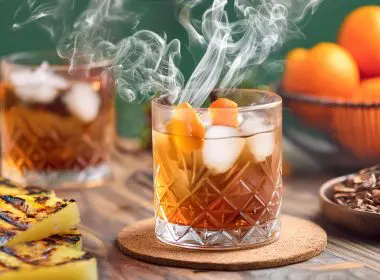
Get crafty: 6 Bold Smoked Bourbon Cocktails to Impress Your Guests
Exploring the flavor wheel with Wild Turkey
On your quest to bourbon-tasting greatness, it helps to start with a classic profile. This profile should be rich and robust, encompassing all the iconic bourbon flavors. This is where Wild Turkey shines. Its flavor profile is a superb benchmark for understanding just how sweetness, spice, and charred oak all work in unison.
Follow the bourbon wheel tasting steps, and you can expect hefty notes of vanilla, caramel, and rich baking spices, hints of citrus, and a long, lingering oak finish. It’s the kind of bourbon that makes the flavor wheel click in your mind. You look, taste, consult the wheel and think: “Aaah! So that’s what they mean by sweet and spicy”.
Once you’ve got the hang of Wild Turkey Bourbon, you can move onto Wild Turkey 101. With a higher proof of 50.5 ABV, Wild Turkey 101 amplifies the bourbon’s aroma and taste. Expect even more intense notes of vanilla, caramel and oak with a spicy, peppery bite from the rye. If you’re a newbie to bourbon, we recommend working your way up the mountain rather than starting at the top.
Then, when you’re ready for the next flavor adventure, try Wild Turkey Rye and Wild Turkey 101 Rye. Here the spice takes center stage—think black pepper, baking spices, dry oak, and herbal warmth, supported by classic vanilla and caramel with a subtle fruity undertone.
Get creative: The Best Bourbon Whiskey Cocktails to Make at Home
What a flavor wheel tells you about your taste

The real magic of the bourbon wheel (besides encouraging more bourbon tasting) is what it tells you about yourself. We all have preferences, and it helps nail down what you’re looking for before spending your hard-earned cash. Do your taste buds gravitate toward sweet and dessert-like notes? Do you love bold spice and smoky oak? Or are fruit-forward flavors and nutty profiles for your vibe?
Once you can confidently identify what you’re tasting, finding your perfect bourbon becomes a whole lot easier. In the end, your palate matters more than any expert’s opinion, and the best bourbon is the one you enjoy the most. Happy tasting!
Dig deeper: An Easy and Concise Guide to the Different Types of Whiskey
For more bourbon action and knowledge nuggets, visit the Wild Turkey website (opens in new window), and if you ever find yourself in Lawrenceburg, Kentucky, stop in at the official tasting room. Explore more bourbon (opens in new window) and whiskey (opens in new window) recipes and stories, and sign up for our newsletter (opens in new window) to keep your tasty journey rolling.