Inside The World of Cognac with Tristram Fini: Culture, History and What's Next

Jump to:
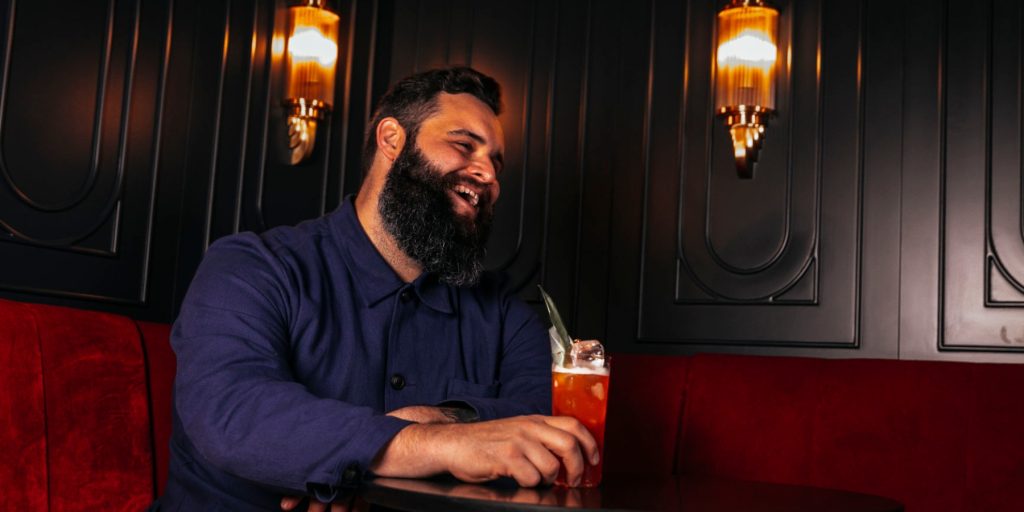
The first time Tristram “Tris” Fini encountered Cognac, he was 18 years old and working behind a bar in Perth, Western Australia. “It came from France, and it was a brandy. That’s basically all we knew,” he recalls. First impression? “A little bit fiery.”
Twenty years later, the conversation looks very different. Today, Tris is Campari Academy & Trade Advocacy Manager, a seasoned hospitality professional and one of the people helping shape how a new generation discovers Cognac. Over the course of our chat, we got him talking about much more than tasting notes and cocktails: hip-hop, social history, changing drinking habits and one surprisingly resilient question: how does a spirit that has been around for centuries keep finding its way into contemporary culture?
Wait… what actually is Cognac?
Before we get into the juicy (or fiery?) bits, we need to start with a simple truth—actually, two. All Cognac is brandy. Not all brandy is Cognac.
To carry the name, the spirit has to be produced within the Cognac appellation in France and follow strict rules governing how it’s made. The appellation was established in 1936, with requirements covering everything from where Cognac can be produced and which grapes can be used to yields and time spent aging in oak.
It’s a level of regulation that Tris sees as fundamental to understanding the category. Cognac may have traveled across audiences and drinking cultures over the decades, but wherever it went, the standards behind the name stayed firmly in place.
The quality has always been at the cornerstone of the Cognac category.

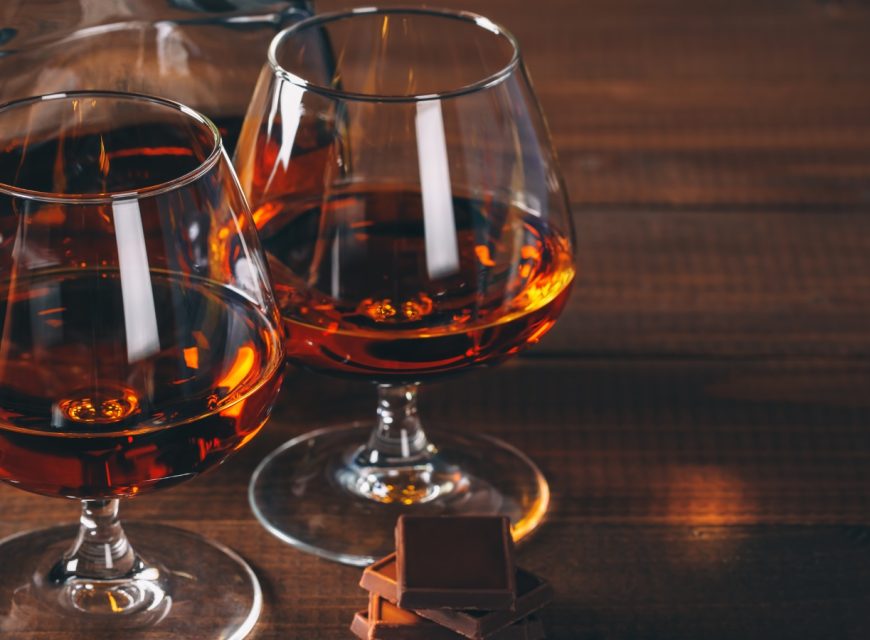
To make sure we’ve got our facts straight—and know our VS from our VSOP—here’s Cognac in 60 seconds:
- Where: The Cognac appellation in southwest France
- Made from: White wine grapes (primarily Ugni Blanc) fermented before distillation
- Distillation: Traditionally double-distilled in copper pot stills
- Aging: The resulting eaux-de-vie mature in oak before blending for at least two years
- VS (Very Special): The youngest eau-de-vie in the blend is aged for at least two years
- VSOP (Very Superior Old Pale): At least four years
- XO (Extra Old): At least ten years
And if you spot Grande Champagne or Petite Champagne on a Cognac label, they’re two of Cognac’s designated growing areas, or crus. Nothing to do with the sparkling wine.
TM: On that note, what’s one of the most misunderstood facts about Cognac?
Tris: The assumption that Cognac can only be aged in French oak. That’s not actually the rule. If the oak is new, it doesn’t necessarily have to be French. If it’s held something previously, that’s where the rules come in. So, for example, you could use a new barrel made from American white oak. But if that American oak barrel had previously held bourbon, you couldn’t use it for Cognac.
Cognac and its reputation problem

Picture Cognac and there’s a good chance your mind goes somewhere rather old-school: an after-dinner pour, a rounded glass warming between two hands, perhaps a leather armchair somewhere in the background.
The trouble is, some of those rituals stuck around a little too well.
“For a time, Cognac kind of fell off to the wayside,” Tris says of the category’s relationship with bartenders in more recent decades. “It became a category that was on a back bar gathering dust.”
But, as he explains, Cognac has never belonged exclusively to the quiet end of the evening. There’s another side to its drinking culture: high-energy social settings, from nightclubs to at-home pre-drinks.

TM: So clearly, there’s not just one answer to how you’re supposed to drink Cognac?
Tris: Exactly. It’s way more versatile than many might think, and new generations seem to be finding their own way to it. I would say Cognac is experiencing a bit of a revival right now.
Promising. Time to find out more.
From high society to a symbol of inclusion
Like most good stories, this one begins long before anybody was talking about cocktail trends.
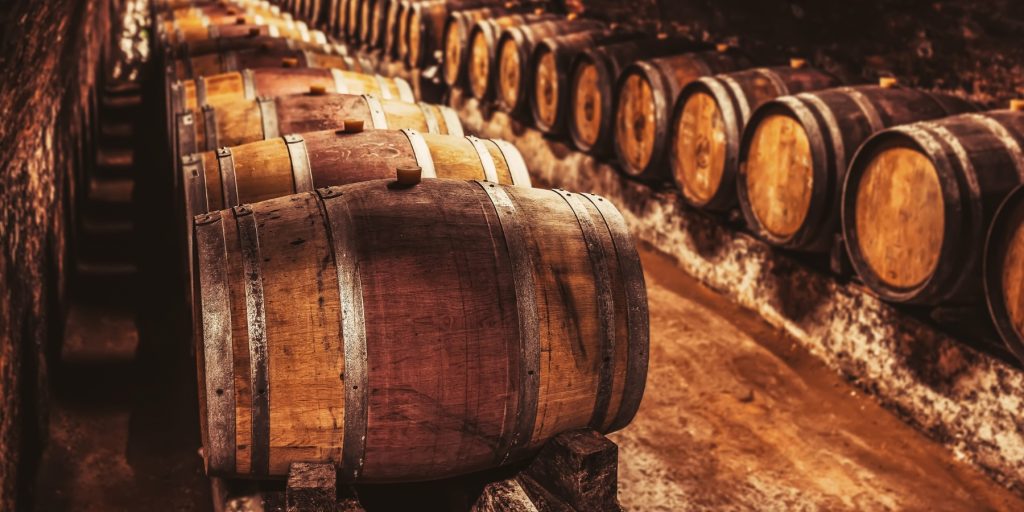
Tris: Cognac had long been associated with prestige. It required time, expertise and patience. First came the grapes, then distillation, maturation, blending and years of waiting. It’s a style of spirit that’s incredibly hard to shortcut. That reputation traveled across Europe, particularly among aristocratic and affluent circles.
TM: So how did the story eventually moved beyond drawing rooms and fine-dining tables?
Tris: During the World Wars, not all people could share experiences in an integrated manner. But for some Black and other non-white American service members stationed in Europe, life overseas brought different experiences of communal drinking, including encounters with French spirits such as Cognac. When they returned home, Cognac came with them in more ways than one. The spirit hadn’t lost its luxury status. But another layer had been added to what it represented. A drink associated with prestige could also carry memories of being welcomed into spaces that had not always been open to them. This helps explain at least part of the strong connection between Cognac and Black American drinking culture.
Following the “golden thread” into hip-hop and beyond
Fast-forward a few generations and Cognac starts appearing somewhere very different: hip-hop. The connection didn’t come out of nowhere.
“There’s a golden thread running between generations, as drinking habits and cultural associations were passed down,” Tris says. “Cognac brands were speaking directly to Black American consumers too, appearing in publications such as Jet and Ebony, where images of Black success and affluence offered a natural setting for a spirit already associated with prestige. As hip-hop grew, those same associations with success, aspiration and status gave Cognac a natural place in that culture”.
Indeed, by the 1990s and early 2000s, Cognac names were appearing in lyrics and music videos. Nas and 2Pac referenced Hennessy in their tracks. Fetty Wap’s later “1738” nodded to Rémy Martin 1738. And then there was Busta Rhymes’s Pass the Courvoisier, putting one of Cognac’s biggest names right in the title.
The spirit had found its way into the hands, in the hearts and minds, and in the lyrics of the hip-hop generation.
TM: What about Cognac’s relationship with music beyond hip-hop?
Tris: As a spirit of inclusion, Cognac has found its way into jazz, funk, soul, Motown and R&B, through disco and hip-hop, and into modern jazz in the UK. And I think it’ll keep moving. I still see it having a place in house, dance and electronic music too.
How Cognac is finding a new audience
TM: So, what does a Cognac revival actually look like?
Tris: The idea is to hand the rulebook to bartenders and see what happens.
TM: Is that what initiatives like Courvoisier Connoisseurs do? Can you tell us more about it?
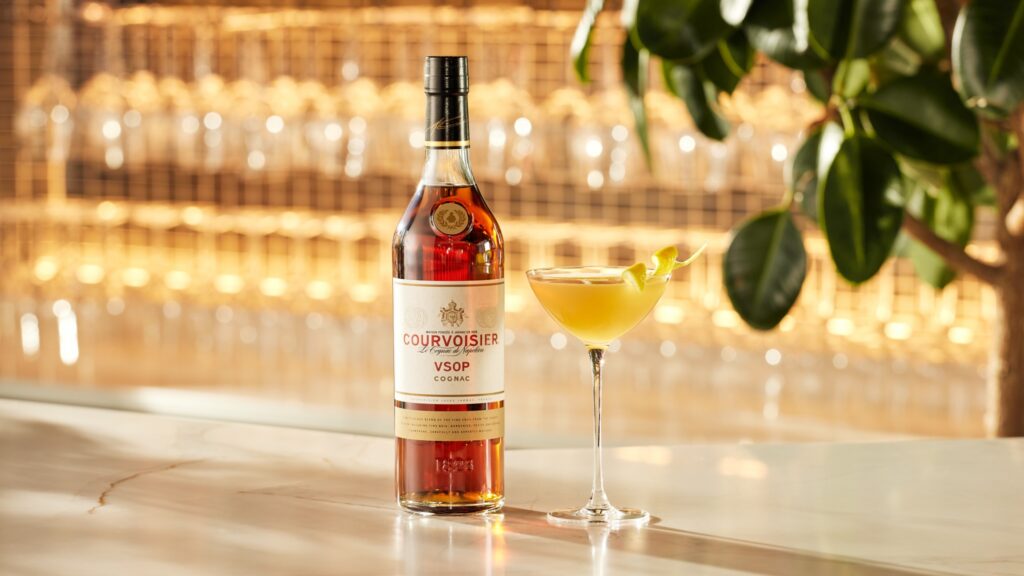
Tris: Exactly. Courvoisier Connoisseurs is a UK bartender initiative now in its second year. In year one, we asked competitors to translate a meaningful moment in their career, perhaps when they felt they’d made it or fallen in love with the industry, into a Courvoisier VSOP (opens in new window) serve they could present and tell a story through. This year, we pushed the idea further. Bartenders returned to a defining career moment for one serve, then created a second by reimagining a classic cocktail where Cognac wouldn’t normally take center stage, placing Courvoisier VSOP at its heart. Take 25-year-old winner Eddie Swallow. His defining moment came courtesy of a regular at the Manchester bar where he worked, who stopped by whenever work brought him to the city and told Eddie one busy day, “If I hadn’t seen your face there, I would have walked straight back out.” Flattering, eh? And then his creation confirmed what makes Eddie one to watch: a Cognac variation on the Paloma, made using homemade ingredients and fully carbonated by him.
TM: Get bartenders excited about Cognac and you’d imagine some of that excitement eventually reaches the people sitting across the bar…
Tris: Part of the program is that for bartenders to qualify for an additional set of points in the semifinal, they would need to have the drinks available for two weeks in their outlet. In other words, these competition drinks aren’t destined to disappear after judging. Customers could actually order them. People get to encounter a different kind of Cognac serve, while putting those drinks on menus gives bartenders a reason to start conversations about why the spirit is there in the first place.
Neat, mixed, in cocktails: how to drink Cognac, according to the expert
All this talk of reinvention raises a fairly obvious question: if you’ve got a bottle of Cognac at home, what are you actually supposed to do with it? The reassuring answer is that there’s more than one way in.
Where to start if you’re new to Cognac
When it comes to how to drink Cognac for beginners, Tris keeps things refreshingly simple: “I would say, start with Courvoisier VS (opens in new window). VS is the youngest of the main age classifications and offers an accessible introduction to the category, with plenty of versatility for experimenting with mixed drinks and cocktails.”
Neat, warm or with a splash of water?
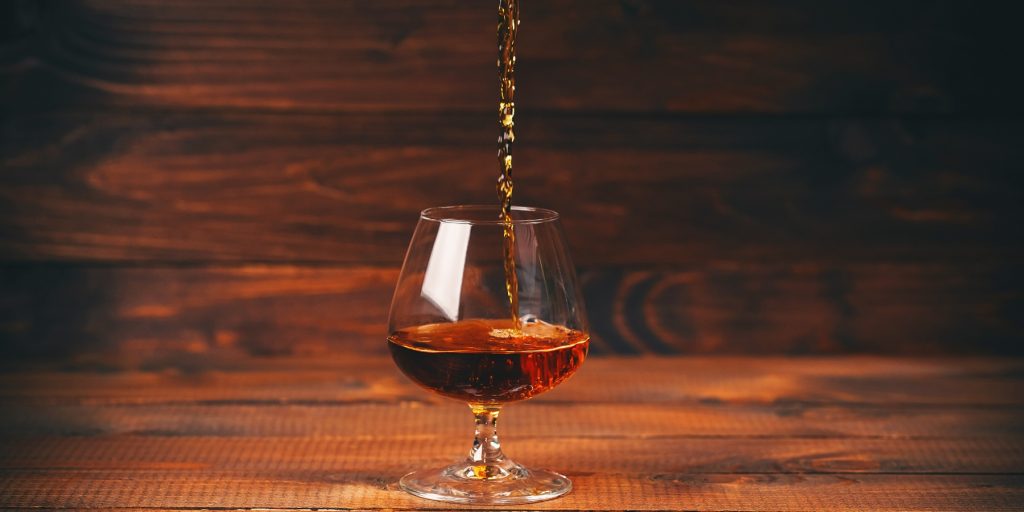
“One of my earliest experiences serving Cognac involved warming a Napoleon glass over steam before pouring it for a guest as a digestif,” Tris recalls.
But don’t worry: you don’t need to recreate the ritual every time you pour a glass. Cognac can also be enjoyed neat at room temperature, while a small splash of water can soften the alcohol slightly and help open up the aromas if that’s how you prefer it. Plus, warming the glass in your hand is one thing, but actively heating the Cognac is unnecessary.
If you ask our Master Blender Thibaut, he loves to serve Courvoisier VSOP from the freezer with smoked salmon—an incredibly unexpected meeting of flavours and textures.
For those coming to Cognac as a whiskey drinker, some of the ritual will feel reassuringly familiar: the unhurried pour, taking in the aromas, tasting it neat or opening it up with a little water. The surprise is what happens once you start paying attention to the differences. Cognac brings its own fruit, floral notes and grape-driven character to the glass, making familiar drinking rituals feel like a whole new tasting experience.
Mixed? Absolutely.
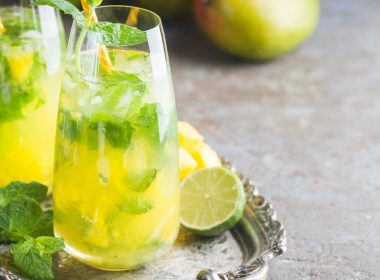
If the image of adding a mixer to Cognac makes you feel like you’ve just broken some ancient French rule, you can relax. Mixed serves are already an established part of the way people drink Cognac. Tris points out that Cognac with Cola or lemonade remains a significant serve in UK pubs and mainstream venues. “One mixed drink to try with Courvoisier VS is the VS & Lemonade—taking 2 parts of Courvoisier VS and 5 Parts of Lemonade mixed over ice in a highball glass. To perfect this serve, add a slice of lemon and a mint sprig.”
If you don’t know how to drink cognac mixed, VS and VSOP are approachable places to start experimenting with longer drinks and cocktails, whether you’re keeping things simple with a mixer or swapping Cognac into a familiar recipe.
And what about drinking Cognac with coffee? When we asked Tris to name the one Cognac cocktail everyone should try at least once, he didn’t hesitate:
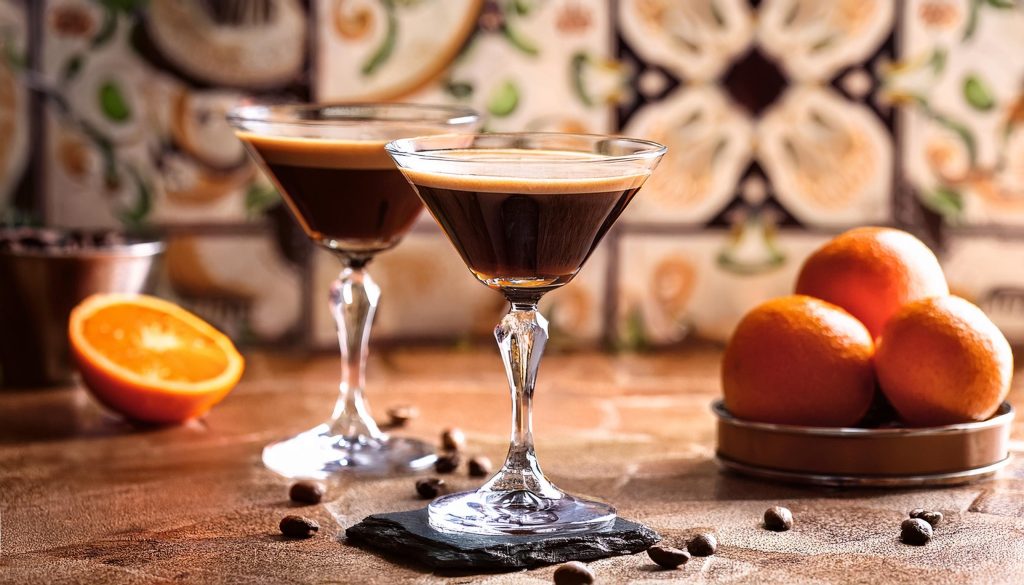
Tris: “An Espresso Martini made with Courvoisier VSOP.”
Classic? Not exactly. Tempting? Very.
Here's how to make an Espresso Martini with Cognac:
Ingredients
- 1.5 oz Courvoisier VS or VSOP
- 0.5 oz Coffee liqueur
- 1 oz Espresso
- 0.5 oz Sugar syrup
- 3 Coffee beans, to garnish
Method
1. Add all the liquid ingredients to a cocktail shaker with ice
2. Shake well and fine strain into a coupe or Nick & Nora glass
3. Garnish with three coffee beans
The cocktails that brought Cognac back
Once you start mixing with Cognac, you quickly discover you’re in very good company.
There is a beautiful history of classic cocktails that come through with Cognac, like the Sidecar from Harry's New York Bar in Paris or the Sazerac from the Sazerac Coffee House in New Orleans. There are lots of ways in which Cognac has been used traditionally in drinks. And in the last 15, 20 years, we've had a great resurgence in classic cocktails.
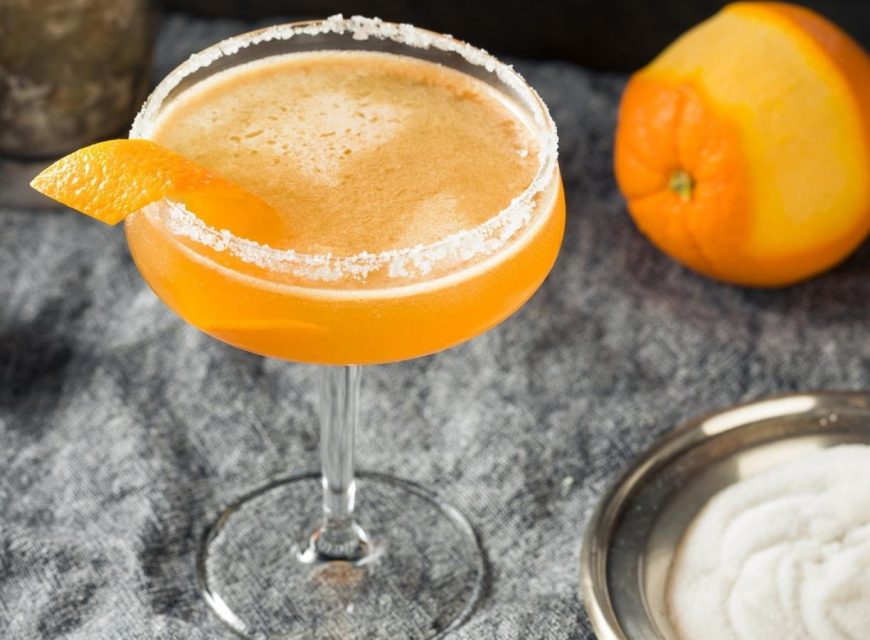
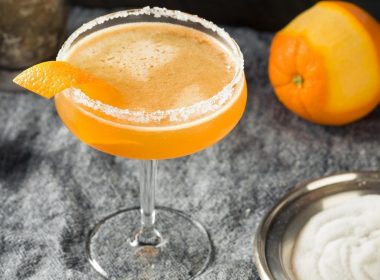
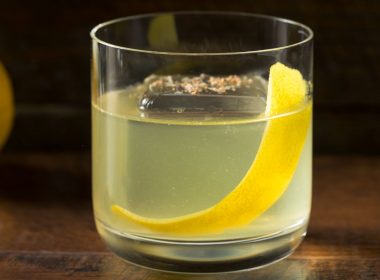
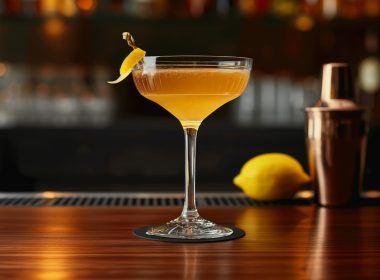
The Sidecar (opens in new window) is perhaps one of the best-known places to start, bringing Cognac together with orange liqueur and lemon juice. The French 75 (opens in new window), in its original Cognac version, pairs the spirit with lemon, sugar and Champagne. Then there’s the Sazerac, whose story began with Cognac, and the Vieux Carré (opens in new window), where Cognac shares the glass with rye, sweet vermouth and a French herbal liqueur.
But classics only tell half the story. As we’ve already seen with Eddie’s Cognac Paloma, some of the most interesting things happen when bartenders take the spirit somewhere less expected.
TM: If someone wants to know how to drink Courvoisier Cognac beyond the classics, what’s your favorite cocktail to make?
Tris: I’m going to answer this in two parts. At Maison Courvoisier, I often go for a Stinger made with Courvoisier VSOP and mint liqueur. But generally, a Negroni with Courvoisier VSOP is stunning. I love making Negronis… I’m a lazy bartender.
But there’s a more serious point hiding behind the confession. He loves to see how people taste it and get hit by so many layers of complexity and richness.
There's some sweetness from the Courvoisier, especially the VSOP, which has this wondrous floral and gingerbread nose. They're just like, ‘Oh, okay.’ It's a three-ingredient drink. There's nothing to hide behind besides good flavor.

The future of Cognac
We’ve covered centuries of history, drinking rituals and more than a few cocktails. Time to put Tris on the spot.
TM: What comes next for Cognac?
Tris: In an ideal world, the future of Cognac is bright.
He sees opportunities to introduce it to new communities while continuing to engage the people and drinking cultures where Cognac already has a place. But his answer quickly takes us somewhere we weren’t expecting: the vineyard.
“Climate change isn’t being anyone’s friend,” he says. Higher temperatures can affect the wines that will eventually be distilled into eaux-de-vie, including characteristics such as their acidity and ripeness. For a spirit whose identity is so closely tied to where and how its grapes are grown, what happens in the vineyard ultimately matters in the glass.
Then there’s another kind of change happening. Drinking habits themselves are shifting, and Tris acknowledges that where and how people choose to enjoy alcoholic and non-alcoholic drinks is seeing the growth in lighter and
longer serves coming to the forefront.
They’re real challenges, and Tris doesn’t pretend otherwise. But neither does he sound pessimistic about a category that has spent centuries adapting to new places, new audiences and new ways of drinking.
If we can take anything from the history of Cognac, it always comes back bigger and stronger.
Maybe that’s the real thread running through Cognac’s story: it keeps changing without losing sight of where it came from. How will we drink Cognac next? Let’s wait and see as a new generation of bartenders and drinkers is finding its own way into the story.
Consider your Cognac curiosity officially stirred. Keep browsing The Mixer for more Cognac cocktails and fresh ways to shake up the classics.
FREQUENTLY ASKED QUESTIONS
Think Cognac belongs on the dusty back bar? Think again. Here’s the story in one quick pour:
- Cognac is a type of brandy made under strict rules in France’s Cognac region, with classifications including VS, VSOP, and XO.
- Its reputation is changing. Once strongly associated with after-dinner drinking and old-school luxury, Cognac is finding new audiences through bartenders, cocktails, and different drinking occasions.
- Cognac has deep ties to Black culture. Tris traces a “golden thread” through generations of Black American drinking culture, with Cognac later finding a natural place in hip-hop.
- And the music story goes further. Cognac has moved through jazz, funk, soul, Motown and R&B to disco, hip-hop and modern UK jazz, with house, dance and electronic music potentially next.
- There’s no single right way to drink Cognac. Enjoy it neat at room temperature, add a little water, mix it into a longer serve, or use it in cocktails. Beginners can start with VS.
- Classic cocktails helped keep Cognac behind the bar. The Sidecar, original Cognac French 75, Sazerac, and Vieux Carré all have strong links to the spirit, while bartenders are also taking it in new directions.
- The future comes with challenges and possibilities. Climate change and evolving drinking habits are reshaping the category, but Tris believes Cognac can continue adapting and come back “bigger and stronger.”