
Hugo Spritz Variations: Gin, Rose, Mocktail & Berry Twists

Jump to:
Who knew elderflower had such a social life? Born in 2005 in South Tyrol, where Italian aperitivo culture meets the German-speaking Alpine world, the Hugo has traveled well beyond its mountain roots, picking up admirers and a few new ingredients along the way.
But the classic is just the beginning. From gin-spiked versions to blushing berries and unexpected autumnal twists, these Hugo Spritz variations give the Alpine original plenty of new places to go.
Thirsty for more German drinks? Ya! 18 German Cocktail Recipes
The classic Hugo Spritz, in short
Before we start experimenting, here’s a little reminder of what makes a Hugo a Hugo. The classic combines Prosecco, elderflower liqueur, syrup or cordial, club soda, fresh mint, and lime, served over plenty of ice. Easy to understand the hype, right?
It’s a wonderfully simple combination, with the elderflower bringing sweetness, the lime adding a citrusy kick, and the bubbles keeping everything light. Find the full measurements and method in our Hugo Spritz cocktail recipe.
Gin Hugo: the variation everyone is asking about

Does a Hugo Spritz have gin? Not traditionally, but adding gin gives the classic botanical depth and a little extra kick. It’s an easy upgrade for anyone who loves the original but wants something with a bit more backbone.
Bulldog London Dry Gin (opens in new window) brings citrus, lavender and subtle spice notes that play nicely with the elderflower and mint, giving the cocktail a more aromatic character. Bickens Gin (opens in new window), with its juniper-led profile and bright citrus notes, takes things in a crisper, more classic gin direction. Try both, and decide for yourself what’s the best gin for a Hugo Spritz.
Ingredients
- 0.5 oz London Dry Gin (Bulldog or Bickens)
- 5 oz Prosecco
- 0.5 oz Elderflower liqueur or syrup
- 1 oz Club soda
- 3–4 Fresh mint leaves
- 1 Lime wedge
- Ice
Method
- Add bruised mint to the bottom of a large wine glass
- Pour in the elderflower liqueur (or syrup) and gin, give it a stir and leave to infuse with the mint for a couple of minutes
- Add ice, then pour in the Prosecco and top it off with soda, giving it one more light stir
- Garnish with an extra sprig of mint, and a slice of lime then serve
Virgin Hugo: the mocktail version
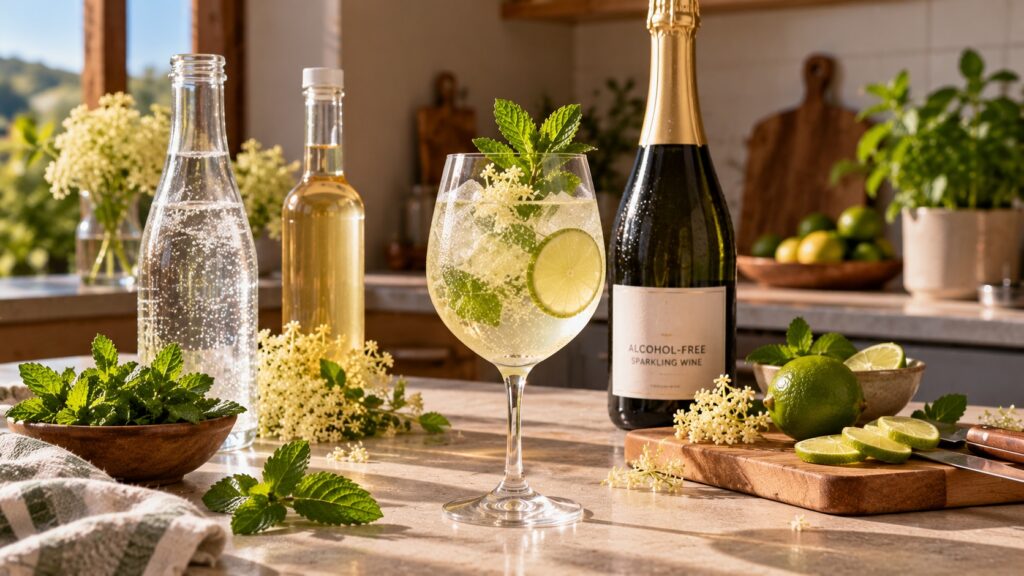
A good spritz doesn’t necessarily need alcohol to keep its charm. With elderflower cordial, fresh lime, mint, and a generous pour of something sparkling, the Hugo Spritz mocktail earns its place at the aperitivo table.
Alcohol-free sparkling wine is the closest match to the original, but sparkling water works beautifully if you’re after something lighter.
Ingredients
- 1 oz Elderflower cordial
- 3 oz Alcohol-free sparkling wine
- 1 oz Sparkling water
- 4–5 Fresh mint leaves
- 2 Lime slices
- Ice
Method
- Fill a large wine glass with ice and add the elderflower cordial
- Add the lime slices and mint, gently clapping the leaves between your palms first to release their aroma
- Pour in the alcohol-free sparkling wine and sparkling water
- Give everything a gentle stir and serve
Keep the ideas bubbling: Discover More Non-Alcoholic Spritzer Recipes
Rosé Hugo
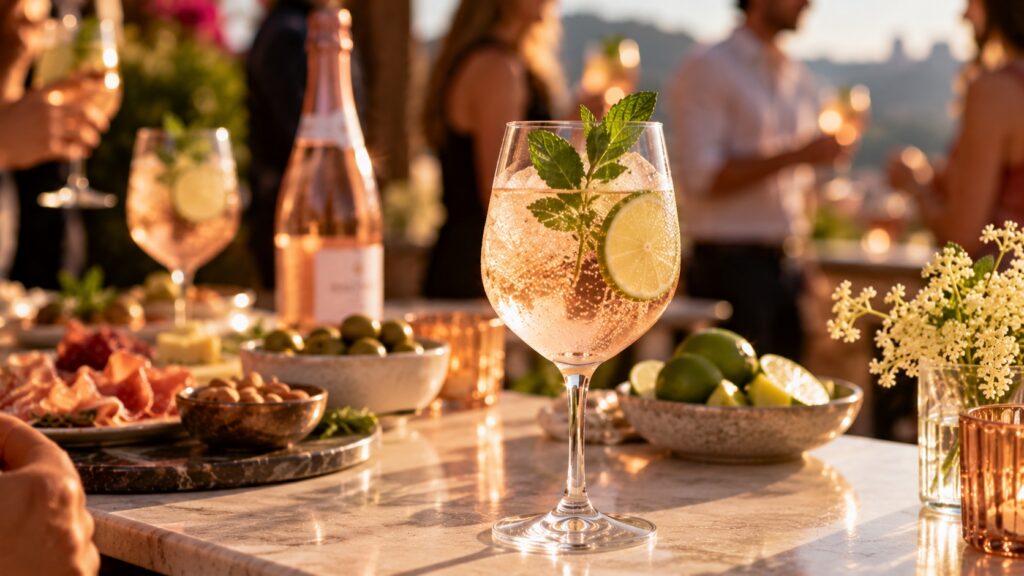
Same Alpine roots, slightly rosier outlook. The Rosé Hugo Spritz replaces Prosecco with sparkling rosé—hence the delicate pink hue and subtle red-fruit notes. A dry rosé works particularly well, balancing the sweetness of the elderflower. It’s an easy switch that changes the vibe of the drink without losing its original character.
Ingredients
- 4 oz Sparkling rosé wine
- 0.5 oz Elderflower liqueur or syrup
- 1 oz Club soda
- 4 Fresh mint leaves
- 2 Lime slices
- Ice
Method
- Fill a wine glass with ice and add the elderflower liqueur or syrup
- Add the lime slices and mint
- Pour in the sparkling rosé and club soda
- Stir gently and garnish with an extra sprig of mint
Strawberry Hugo
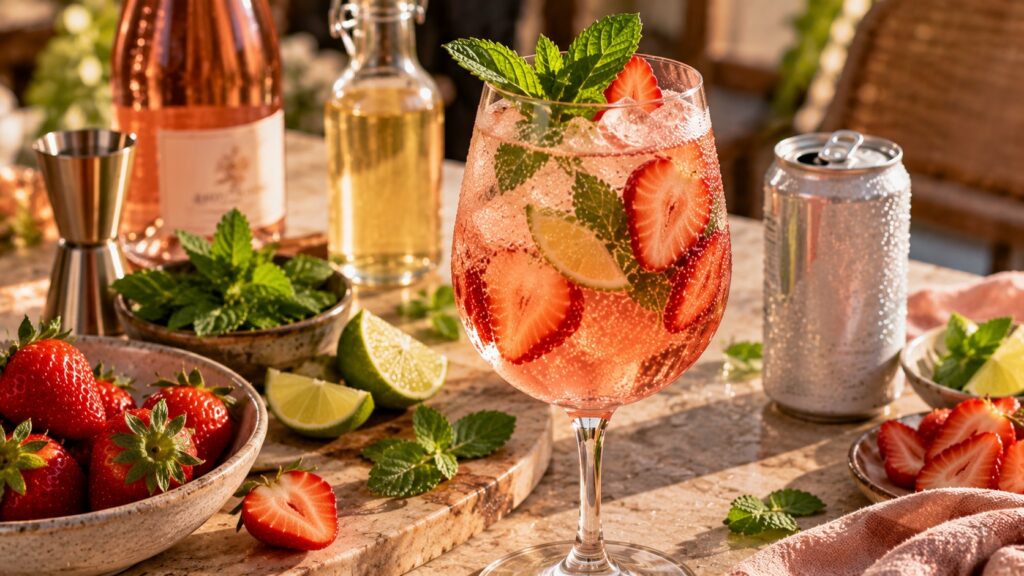
Strawberries and elderflower are old friends, and a Strawberry Hugo Spritz gives them another excuse to get together. Fresh strawberries bring a juicy sweetness and a hint of color, while a little strawberry syrup is a handy shortcut when the fruit isn’t at its best.
Ingredients
- 4 oz Prosecco
- 0.5 oz Elderflower liqueur or syrup
- 2–3 Fresh strawberries, sliced, or 0.25 oz Strawberry syrup
- 1 oz Club soda
- 3–4 Fresh mint leaves
- 1 Lime wedge
- Ice
Method
- Lightly muddle the strawberries in the bottom of a large wine glass (or add the syrup)
- Add the elderflower liqueur or syrup and squeeze in the lime wedge
- Fill the glass with ice and add the mint
- Pour in the Prosecco and club soda
- Stir gently and garnish with a strawberry slice (optional)
TIP: Borrow the sparkling rosé from the previous recipe for a double-berry version.
Raspberry Hugo
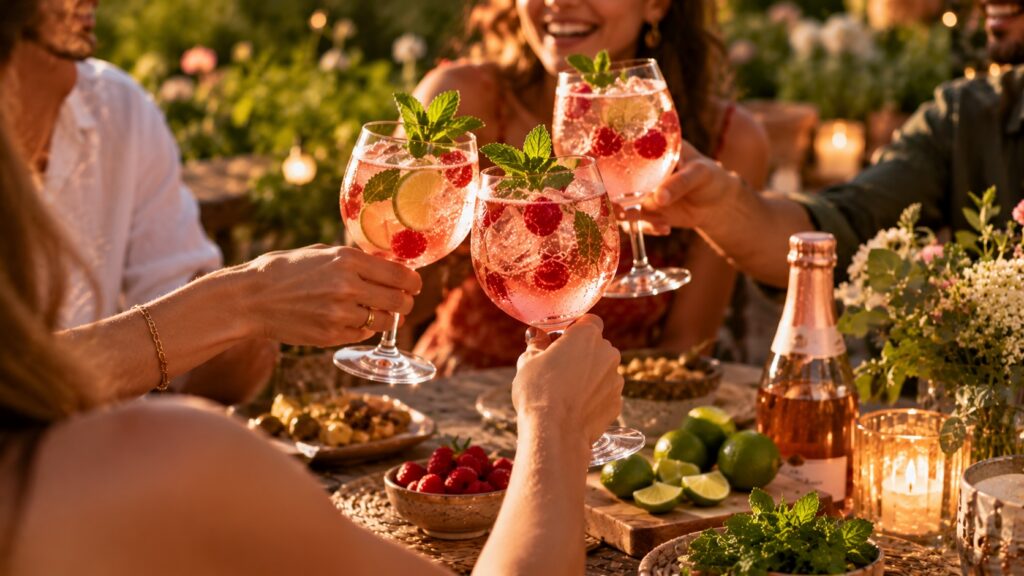
Raspberries have a little more bite than strawberries, which makes them another excellent choice. Their tartness keeps a Raspberry Hugo Spritz from leaning too sweet, while their color turns it into something rather eye-catching.
Ingredients
- 4 oz Prosecco
- 0.5 oz Elderflower liqueur or syrup
- 4–5 Fresh raspberries
- 1 oz Club soda
- 3–4 Fresh mint leaves
- 1 Lime wedge
- Ice
Method
- Gently muddle the raspberries with the elderflower liqueur or syrup in a wine glass
- Squeeze in the lime wedge and add ice
- Pour in the Prosecco and club soda
- Add the mint and stir gently
- Garnish with a couple of whole raspberries
Berry curious for more? 18 Raspberry Cocktails to Try This Year
Lemon or lime? The citrus question

When life gives you lemons, should you put them in a Hugo? You certainly can, although lime is the traditional choice.
Lime’s sharper acidity cuts through the sweetness of elderflower, with a slightly bitter citrus edge that keeps the cocktail lively. Lemon takes things in a gentler direction. A lemon Hugo Spritz has a softer citrus character, particularly when you use slices rather than a generous squeeze of juice.
And if you’re feeling adventurous, give the Cucumber Lime Hugo Spritz a go. Add three thin cucumber ribbons to the classic build, along with the usual lime and mint. The result is crisp, subtly vegetal, and about as close as a cocktail can get to a spa day. Robe optional.
Spicy Hugo
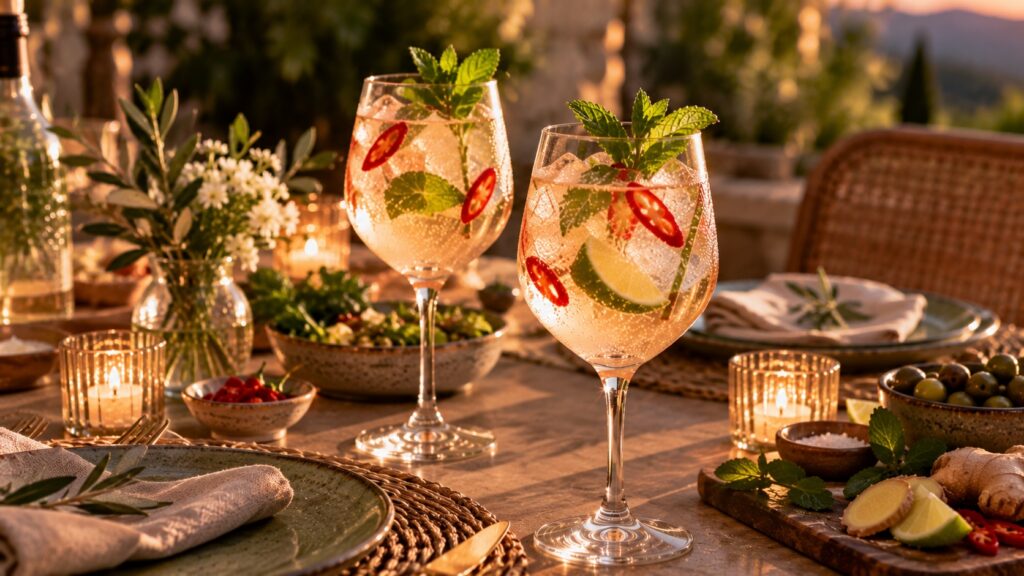
Elderflower might seem too delicate for a little heat, but that’s exactly what makes a Spicy Hugo Spritz interesting. A thin slice of fresh chili brings a sharp contrast to the floral sweetness, while ginger offers a warmer, more aromatic alternative.
Ingredients
- 4 oz Prosecco
- 0.5 oz Elderflower liqueur or syrup
- 1 oz Club soda
- 1 Thin slice of fresh chili or 2 slices of fresh ginger
- 3–4 Fresh mint leaves
- 1 Lime wedge
- Ice
Method
- Add the chili or ginger to a large wine glass with the elderflower liqueur or syrup
- Gently press to release some of the spice
- Squeeze in the lime wedge and fill the glass with ice
- Add the mint, Prosecco, and club soda
- Stir gently and garnish with fresh mint
Start with just one thin slice of chili, especially if you’re using a fiery variety. The heat can build quickly, and you don’t want your first sip to turn into a dare.
Apple Hugo
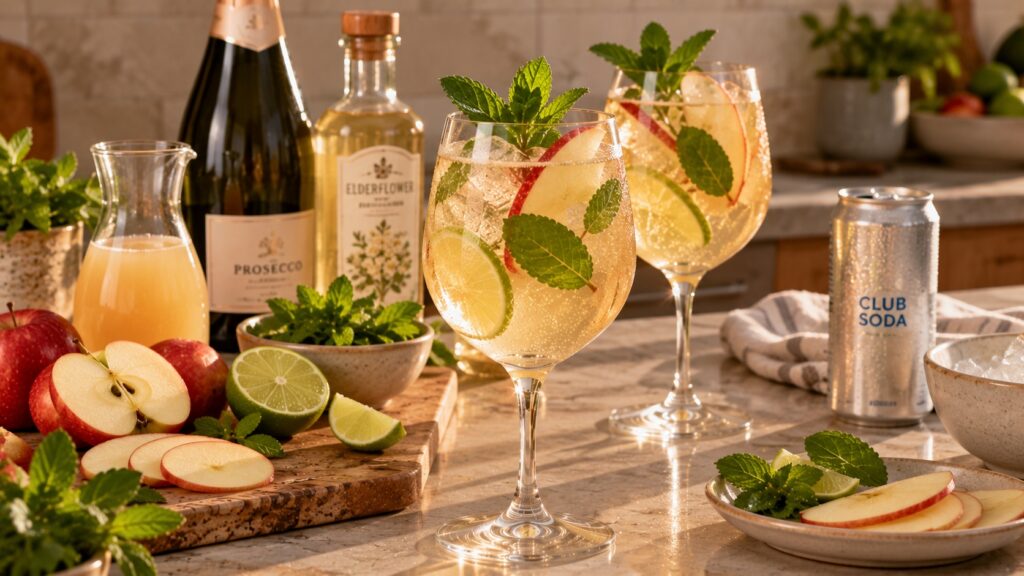
The Apple Hugo takes the Alpine original for an autumn stroll, adding cloudy apple juice for a mellow, orchard-fruit flavor that feels right at home when the temperatures drop.
Ingredients
- 3 oz Prosecco
- 1 oz Cloudy apple juice
- 0.5 oz Elderflower liqueur or syrup
- 1 oz Club soda
- 3–4 Fresh mint leaves
- 1 Lime wedge
- 1 Thin apple slice
- Ice
Method
- Fill a large wine glass with ice
- Add the cloudy apple juice and elderflower liqueur or syrup
- Squeeze in the lime wedge and add the mint
- Pour in the Prosecco and club soda
- Stir gently and garnish with a thin apple slice
You can also swap the apple juice for 7.5–15 ml of apple syrup if you prefer a sweeter, more concentrated flavour. For an extra autumnal touch, add a cinnamon stick as a garnish. It’ll bring a gentle spiced aroma without turning your spritz into apple pie.
Sambuca Hugo
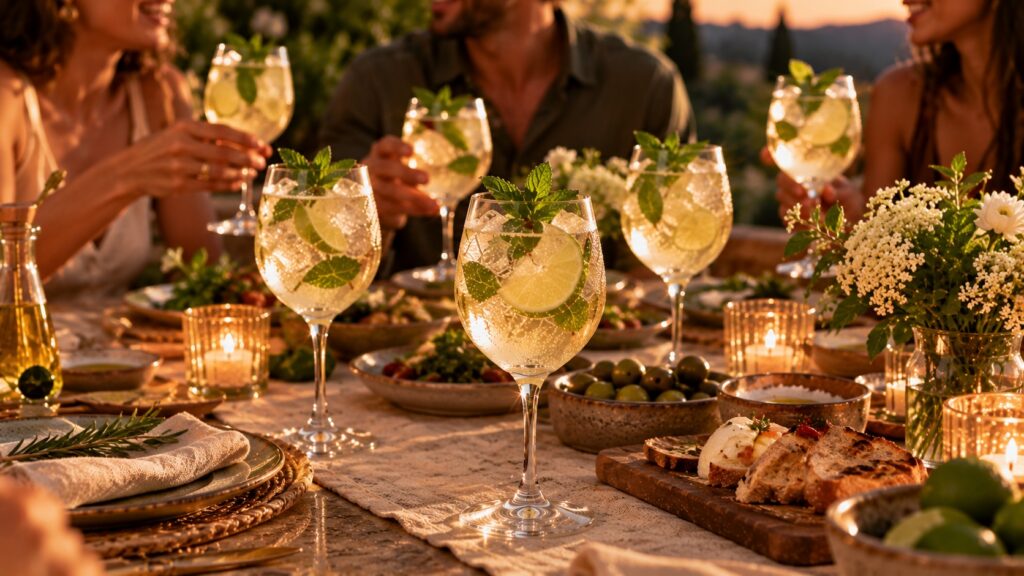
Now for the wildcard. Sambuca brings its unmistakable anise flavor to the Hugo Spritz cocktail, creating a combination that might divide the room. But if you’re partial to licorice notes, this unusual pairing is worth a try. Start with just a touch of sambuca and taste before adding more. You’re after a hint of anise, not a takeover.
Ingredients
- 4 oz Prosecco
- 0.25 oz Sambuca
- 0.25 oz Elderflower syrup
- 1 oz Club soda
- 3–4 Fresh mint leaves
- 1 Lime wedge
- Ice
Method
- Fill a large wine glass with ice
- Add the sambuca and elderflower syrup
- Squeeze in the lime wedge and add the mint
- Pour in the Prosecco and club soda
- Stir gently and garnish with fresh mint
Build your own Hugo variation

By now, you’ve probably realized the Hugo is a pretty accommodating cocktail. Give it a new fruit, a different herb, or a splash of something unexpected, and it’ll usually play along.
The easiest way to experiment is to start with a simple base recipe, then introduce one new flavor at a time. Here’s a handy formula:
- 4 oz Sparkling wine: Prosecco, sparkling rosé, or an alcohol-free alternative
- 0.5 oz Elderflower liqueur, syrup or cordial: adjust to taste, as sweetness and alcohol content vary
- 1 oz Club soda: to keep things light and bubbly
- One twist: fresh fruit, herbs, a little spice, or a measure of spirit
- Fresh mint, citrus, and ice: the familiar finishing touches
Need a little creative nudge? Try peach slices with thyme for a late-summer spin, swap mint for basil to bring out the herbal side, or add a tiny dash of lavender syrup for an extra floral flourish. Just go easy on the last one. You don’t want your cocktail to feel like a scented candle.
And if you’ve caught the spritz bug, there’s a whole bubbly world beyond the Hugo. Explore our spritz cocktails roundup for more ways to put those bubbles to good use.
The Hugo has come a long way. Got a little wanderlust of your own? Keep exploring The Mixer for more cocktail inspiration!
FREQUENTLY ASKED QUESTIONS
The Hugo has come a long way from the Alps, and it’s picked up quite a few new tricks along the way. Here’s how to give this elderflower favorite your own twist.
-
Classic Hugo Spritz: The original combines Prosecco, elderflower liqueur, syrup or cordial, club soda, fresh mint and lime.
-
Gin Hugo: Bulldog London Dry Gin adds citrus, floral and spice notes, while Bickens Gin brings a crisper, more juniper-forward character.
-
Virgin Hugo: Elderflower cordial, mint, lime and alcohol-free sparkling wine make a bubbly mocktail without the booze.
-
Rosé Hugo: Sparkling rosé replaces Prosecco for a pink twist with delicate red-fruit notes.
-
Strawberry and Raspberry Hugo: Fresh berries add sweetness, tartness and a splash of color.
-
Citrus and spicy twists: Swap lime for lemon, add cucumber for a crisp finish or introduce chili or ginger for a little heat.
-
Apple and Sambuca Hugo: Cloudy apple juice brings fall flavors, while a touch of sambuca adds a bold anise note.
-
Make it your own: Start with sparkling wine, elderflower and club soda, then experiment with peach, basil, lavender or your favorite ingredients.


