Bourbon vs. Whiskey: What’s the Real Difference?

Jump to:
If you’ve ever stood in front of a sea of brown bottles, wondering if bourbon and whiskey are the same thing, you’re not alone. It’s a common question, and the fact that the terms are often used interchangeably doesn’t help the confusion. The short answer is yes, but no. All bourbon is whiskey, but not all whiskey is bourbon. The long answer is what we’re talking about today, so stick around and let’s explore bourbon vs. whiskey.
What is whiskey?
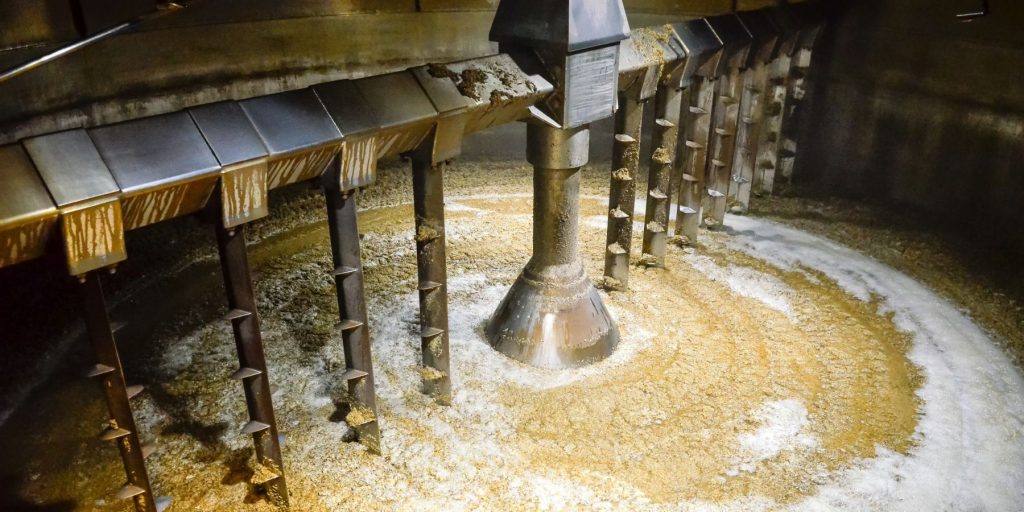
Besides being magic held together with sunlight, whiskey is a category of distilled spirits. They’re made from a single or mixed grain mash and aged in wooden barrels. While recipes or mash bills and distilling and aging techniques vary by region or country, the fundamentals of making whiskey remain consistent—grains are cooked, fermented, distilled, and matured to create the wonderful spirit we call whiskey.
The Scots created Scotch, Ireland makes Irish whiskey, and the United States has rye whiskey and bourbon. Each has its own interpretation of the spirit driven by local ingredients, climate, culture, and craftsmanship. In short, whiskey is the umbrella under which a vast and varied spirits category flourishes.
What is bourbon?
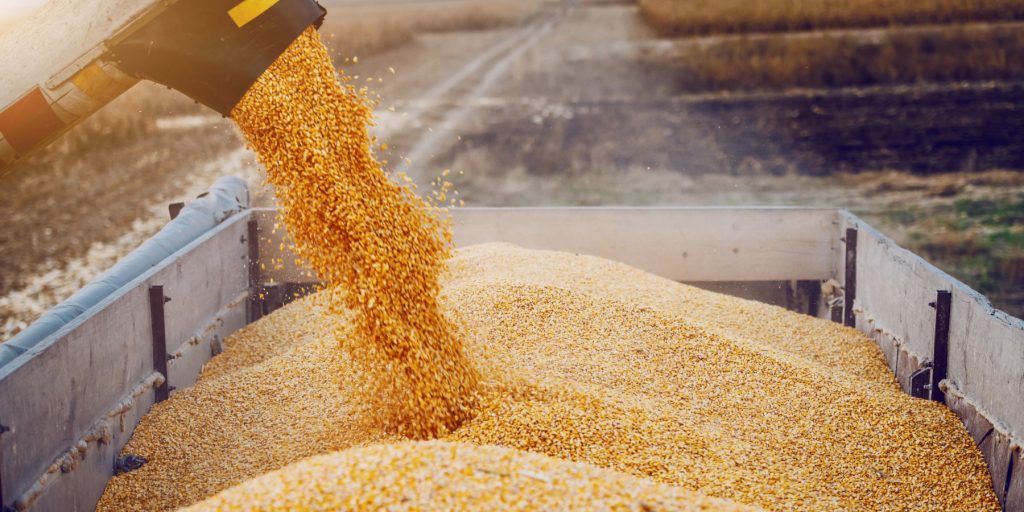
Bourbon is an American style of whiskey that’s defined by a strict set of legal requirements. Its soul and identity are fiercely guarded, and it must be made in the United States to earn its bourbon title. Where Scotch and Irish whiskies favor barley, bourbon must be made from at least 51% corn. The natural sweetness of corn plays a huge role in crafting bourbon’s signature flavor profile.
What makes bourbon unique is its use of charred new oak barrels for aging. This one rule affects nearly everything you smell and taste in the glass. By law, bourbon must mature in brand-new oak barrels that have been exposed to flame. This process creates a layer of char inside the barrel. The charred interior acts as a filter and flavor engine.
As the spirit rests, the barrel helps remove harsh compounds while imparting the traditional notes of vanilla, caramel, spice, smoke, and toasted wood. During the aging process, no additional flavor or color can be added to the bourbon.
Is bourbon a type of whiskey?

Yes, all bourbon is whiskey, but not all whiskey is bourbon. For a similar comparison, all Champagne is sparkling wine, but unless that sparkling wine is made in Champagne, France, it’s not Champagne. This American heritage and strict definition are what give bourbon its soul, and the distinction matters. The conversation around whiskey and bourbon shouldn’t be seen as a direct rivalry but rather as two tasty avenues to explore under the whiskey family umbrella.
Key differences between bourbon and whiskey
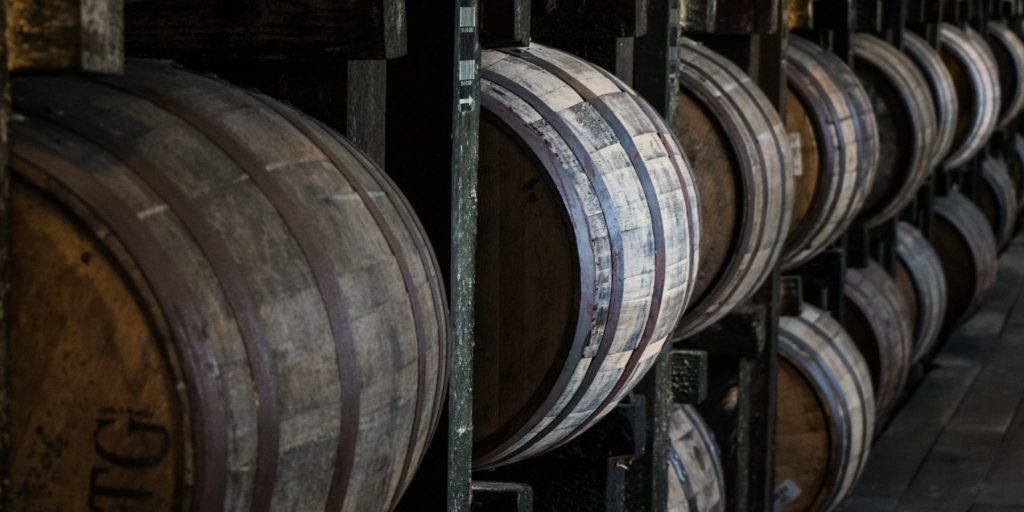
From soil to sip, every step adds complexity and flavor.
Ingredients
When it comes to ingredients, bourbon vs. whiskey couldn’t be any more different. Whiskey favors grains, primarily barley, while bourbon’s mash bill must be corn-heavy. The minimum is 51%, but most bourbons feature a much higher percentage. The rest of the mash bill is made up of rye, wheat, and barley. On the flipside, American rye whiskey must feature at least 51% rye, but you can read more about that here: Bourbon vs. Rye: What’s the Difference?
Aging rules
There are aging processes, and then there’s bourbon’s famously rigid maturation process. It must be aged in charred new oak barrels, and this has to happen in the United States. Kentucky still produces 95% of the world’s supply, although it can be produced in other states. When it comes to global whiskey, distillers have more freedom to play. They rely on new and reused barrels and even finish aging whiskey in barrels from other spirits like wine, cognac, rum, and bourbon.
Flavor profile
Bourbon is famous for its sweeter, fuller notes of vanilla, caramel, spice, and toasted oak with a lingering finish. In comparison, Scotch and Irish whiskey have a swath of flavors ranging from floral, fruity and spicy to dry, smoky and peaty. Which flavors lead the dance are often determined by the style or origin of the whiskey.
Learn more: How to Use a Bourbon Flavor Wheel
Where it’s made
Geography is the clearest difference between bourbon and whiskey. Whiskey can be made anywhere in the world. While styles like Scotch and Irish whiskey are tied to their home countries, others, like Japanese whisky, borrow Scottish traditions while developing their own identity. Bourbon has no flex. It can only be made stateside.
Read more: Discover 15 Types of Whiskey from Around the World
Does bourbon taste different from whiskey?
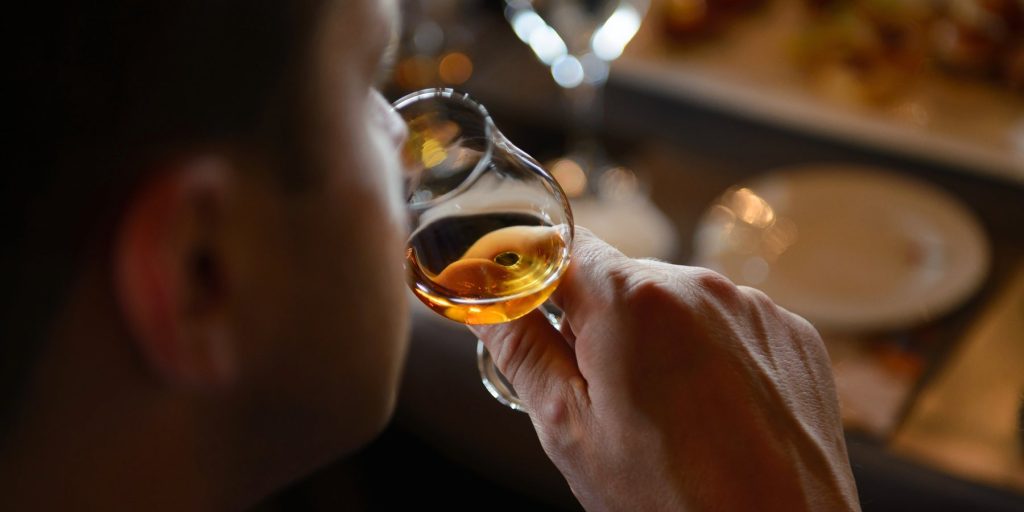
The short answer is yes. Bourbon boasts warm notes of vanilla, caramel, honey, soft spices, nuts, and toasted oak with a lingering sweetness. Whiskey has a much broader palate depending on where it was produced. It can be smoky, earthy, spicy, floral, or fruity. Both are delicious and worth exploring properly.
Is bourbon stronger than whiskey?
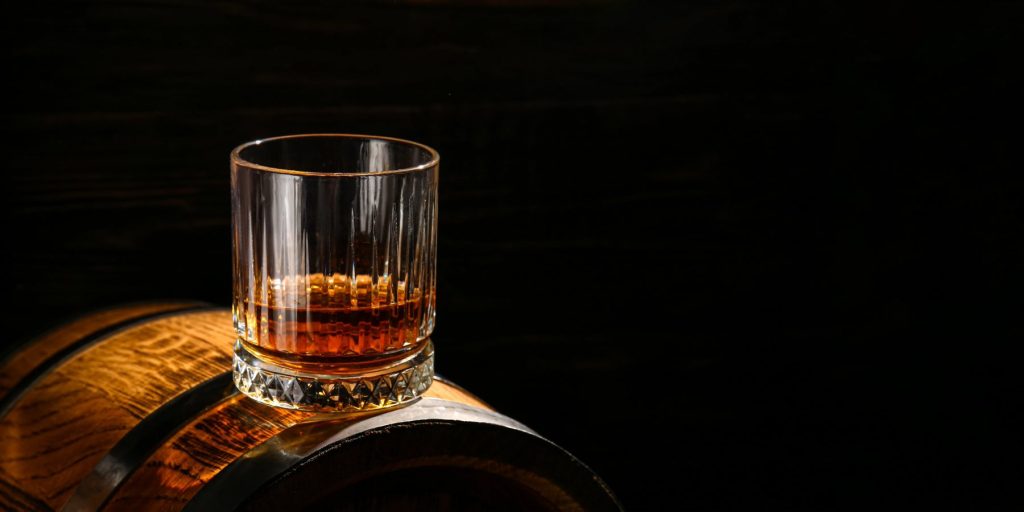
This is a common misconception, but in reality, alcohol content varies by distillery or style. Most bourbons and whiskies fall around the 40-50% ABV range. Some small-batch bourbons like Wild Turkey Rare Breed or Russell’s Reserve 13-Year-Old are bottled in the high 50s. This higher proof means more intense aromas and flavors. Bourbon’s sweetness and staunch oak influence might be the cause of the misconception, but the difference between bourbon and whiskey is more sensory than boozy.
Bourbon vs. whiskey for cocktails
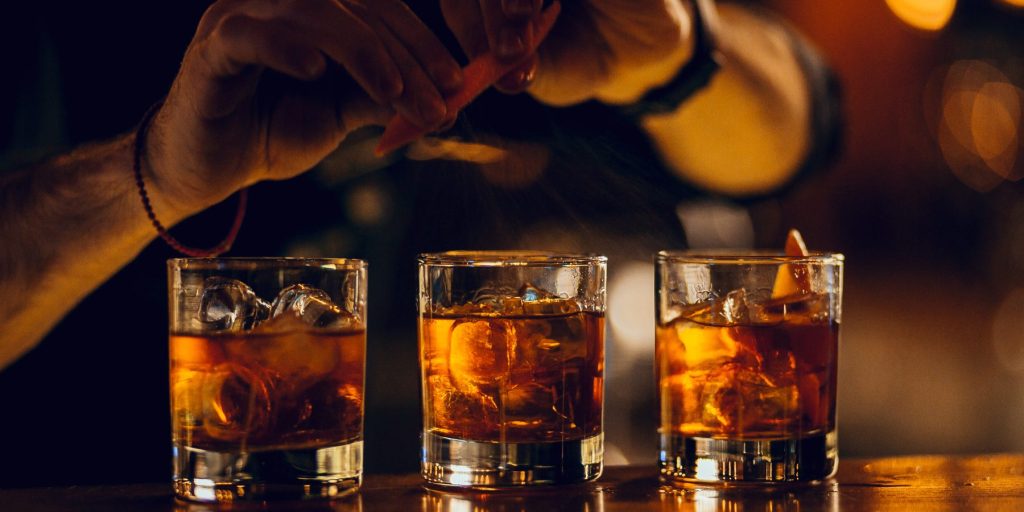
Bourbon is one of the heavy hitters of American cocktail culture. Its stunning balance of sweetness, spice, and oak makes it versatile in spirit-forward and mixed cocktails. Other whiskey styles also sing in the right cocktails. They add sharper flavors with a huge range of tasty cocktail combinations. Each style brings its own personality to your chosen cocktail.
Which should you choose?
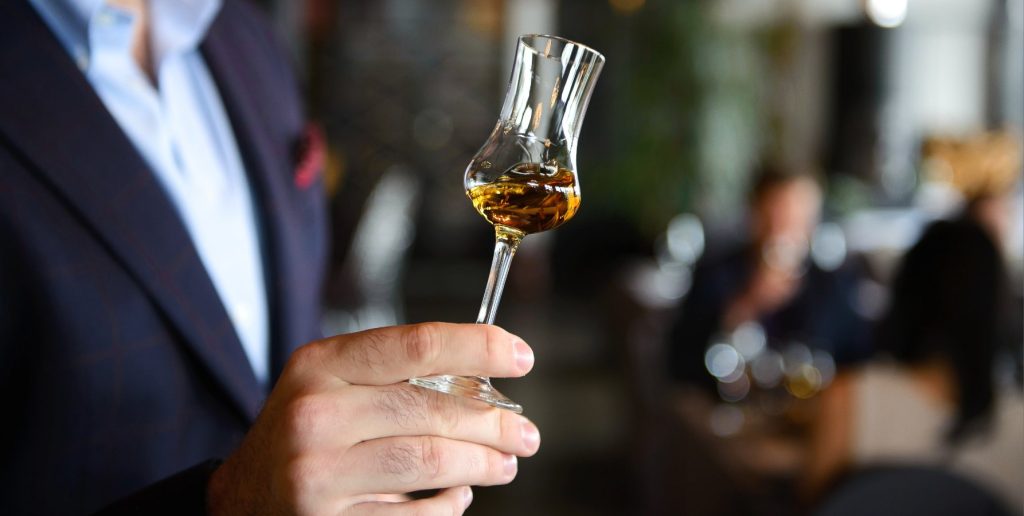
There is no right or wrong answer here, only delicious options to explore. If you’re in the mood for a sweet, warm hug, go for bourbon. If you’re after a smoky, spicy vibe, go for a peated whiskey. Also consider how you are drinking it. Is it neat, on ice or in a cocktail? Is it a special occasion that deserves a special bottle or a chilled Tuesday night with friends? Let the occasion and your personal preference guide your hand.
Bourbon vs. whiskey – quick summary
- Bourbon is a type of American whiskey that is defined by strict production rules.
- Key differences include high corn content, charred new oak barrel maturation, and geographic regulations.
- Bourbon vs. whiskey taste: bourbon typically leans sweeter and fuller. Whiskey ranges from floral and fruity to sharp and smoky.
- The whiskey category has a wide range of styles and flavor profiles.
- Alcohol strength is similar across both, despite common misconceptions.
Thirsty for more bourbon flavors and knowledge? Explore our recipes and articles (opens in new window), and don’t forget to visit the Wild Turkey website (opens in new window). To stay up to date with all things spirits, cocktails, and deliciousness, sign up for our newsletter (opens in new window).